Showing posts with label Brazil. Show all posts

Friday, December 26, 2014

Life Through Museums - Recife


The best way to discover the secrets of a big city is through its museums. In these wonderful places you will see all the history and culture of its humanity.

Only within the hallowed walls of a museum can we trace the history of a civilization and have an idea of how it worked.  Recife was founded by the Portuguese in 1537 and is the home of several artists, musicians and writers; it is also home of more than 20 museums.

The History of Recife and Pernambuco is unique. During the centuries of colonization, Pernambuco saw millions of immigrants and slaves from all over the world flocking into the state.  As a result, it is a diverse land with an array of cultures, religions, languages, colors, flavors, and histories that make up its intricate heritage.

This cultural melting pot has become a regional hub for museums and galleries. These are accurately depicted in the many specific places that are scattered throughout the city, inviting the tourist and the locals to discover and rediscover the individual and collective memory of the city.

A museum can be a fascinating place, and no one is the same as the next. Several museums have become so famous that they are destinations in themselves attracting millions of visitors who flock from across the world to view their exhibits.

The "Instituto Ricardo Brennand" museum


Inaugurated in 2002 by the Brazilian collector and businessman Ricardo Brennand , one of the most important names in contemporary exhibitions in Brazil, The Brennand Museum is a mock-medieval building exhibiting art collected by the Brennand family, that displays around 2,000 pieces of ceramic works, paintings, manuscripts, sculptures, weapons and much more.

The Institute holds a permanent collection of historic and artistic objects of diversified sources, ranging from the early Middle Ages to 20th century, proceeding from Europe, Africa, Asia and America with strong emphasis in objects, documents and artwork related to Colonial Portuguese and Dutch Brazil. The task of preserving the memory of the Netherlanders' moment of glory in Brazil has been adopted by the Brennand family at the beginning of the 19th Century.

The museum also houses one of the largest collections of armory in the world, with 3,000 pieces, the majority of which was produced in Asia and Europe between the 14th and 19th century and the largest private collection of Frans Post's paintings from the 17th century Dutch colonial period in Pernambuco.

The Brennand Museum is headquartered in a castle-like set of structures, named "Castelo de São João". The complex is surrounded by a huge garden endowed with artificial lakes and a number of large-sizes sculptures such as “The lady and the horse” by the Colombian artist Fernando Botero, considered one of the living artists who are most recognized and quoted in the world from Latin America.

The museum also offers a beautiful park area for walks and a cafeteria - a great day out for the whole family.

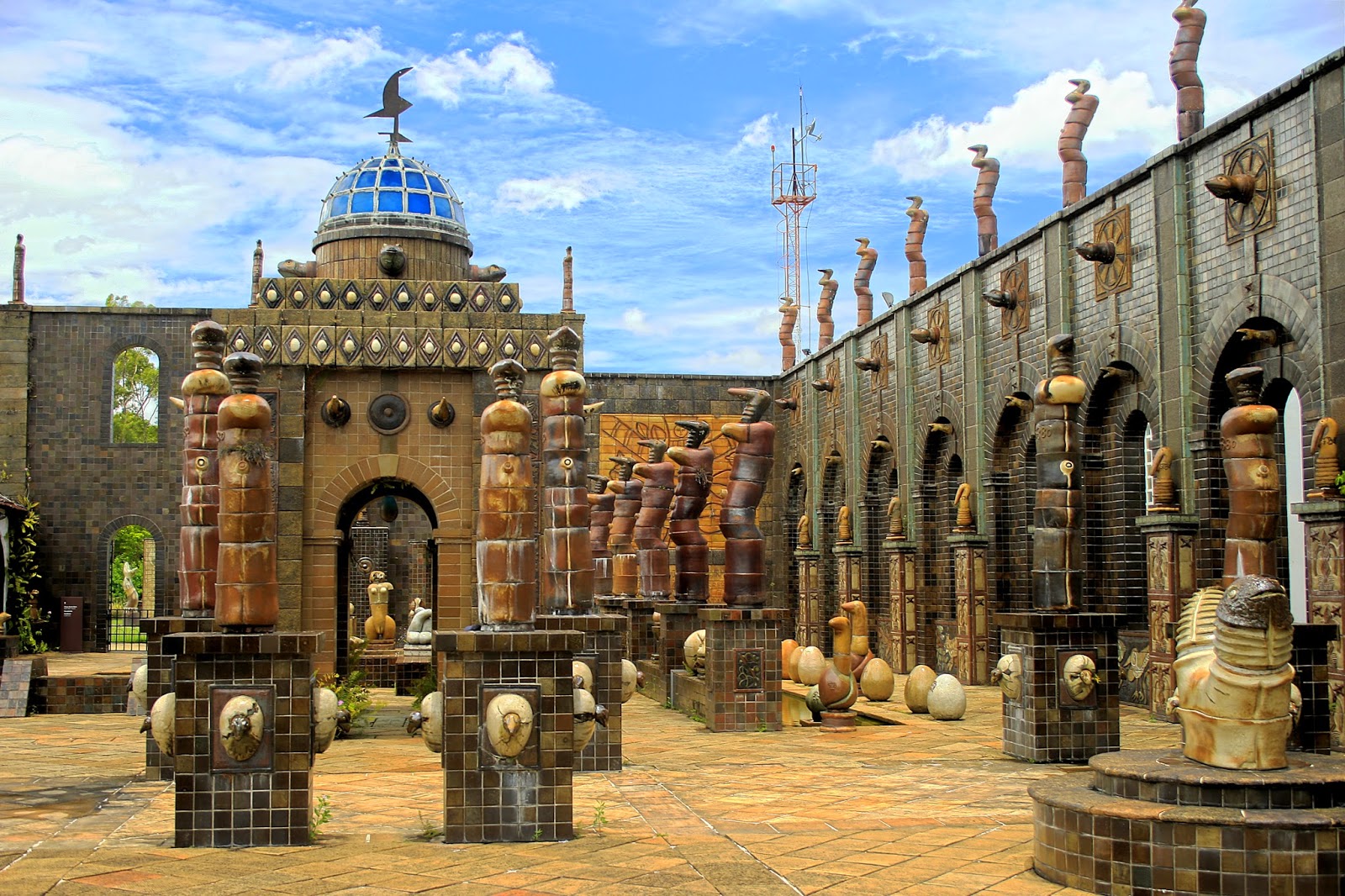
Nearby the Institute, Ricardo's cousin, Fransisco's marvellous sculptures and paintings can be seen at the Francisco Brennand’s Ceramic Workshop (Oficina Francisco Brennand) - in fact, the cover photo for the article shows what awaits you at its entrance.

Kahal Zur Israel Synagogue


The Jewish museum and cultural center is the oldest one in the Americas, dating back to the 17th century. Founded in 1630 by Jews who were once expelled from Portugal and settled in the Netherlands, this museum is part of the Pernambuco historic heritage.

Kahal Zur Israel (Rock of Israel), flourished in Recife from 1636 until 1654, when the northeastern portion of Brazil was taken back by the Portuguese. The less tolerant Portuguese expelled the Jews, most of whom went to Suriname or the Caribbean island of Curaçao. A small group settled in New Amsterdam, nowadays New York City, marking the first Jewish presence in North America. It later moved to the Upper West Side, where it is still called "The Portuguese and Spanish Synagogue."

Based on old maps, archeological excavations uncovered the remnants of the synagogue, including the original Mikvah - a bath for religious ceremonies - under six layers of floors. The restored synagogue reopened in December 2001.

Since then it has become one of the main stops on the city's tourist circuit and its archives attract scores of Brazilian and foreign historians.

There are four synagogues in Recife but many Jews choose to celebrate their weddings and Bar Mitzvahs in the Kahal zur Israel because of its symbolism. The synagogue is also at the center of a broader cultural renaissance. In November of every year, a Jewish festival offering dance, cinema, and food, from Gefilte fish to fluden, attracts around 20,000 visitors.

The place where the first synagogue of the Americas was once situated has recently been identified and its structural foundations located under the large houses, numbered 197 through 203, on the street known as Rua do Bom Jesus, previously Rua dos Judeus (Street of the Jews) in Old Recife.

The Museu do Estado de Pernambuco (The State of Pernambuco Museum)


This historical and antropological museum created in 1929 has a wide and varied collection of pieces that are striking references in Pernamnuco's state history and includes panels about the battles of Monte Guararapes and Tabocas.

The museum collections contain over 12 thousand works of art which invite the visitor to a journey into the local history, from pictures of the Brazilian Colonial Period as well as the Dutch invasion (1630–1654), to those of the 20th and 21st centuries.

Currently the collection of the State Museum has more than 14,000 items, adding important collections that are distributed in the following categories: Archaeology, Indigenous Culture, Dutch presence in Pernambuco, Sacred Art, Afro-Brazilian culture, Iconography, Furniture, Porcelain, Crystals and Painting, with Canvas.

Periodically the museum hosts the “Salão de Arte Contemporânea de Pernambuco”, when emerging artists are selected to represent the new generation of local professionals who will help maintain and shape the new profile of the local art scenery.

The Museu da Cidade do Recife (Recife City Museum)


 This 'Fort of Five Points', built by the Dutch in 1630, is the symbol of the Dutch resistance.

The museum stands out in its collection containing iconographic documents of importance to the preservation of social and urban history of Recife.

Also it houses pictures, reproductions of old paintings (painted by Franz Post) and objects that describe Recife since the period of Dutch rule, such as over one thousand antique photos, tableware, Portuguese and French tiles, among other pieces.

The memory of the cultural capital of Pernambuco is represented by about 150 thousand images and pieces from old houses and the Church of the Good Lord Jesus of the Martyrs, now demolished.

Thursday, January 9, 2014

Parintins - The Amazonian City of Brazil

The city of Parintins is a small Amazonian city that is situated in a fairly inaccessible part of Brazil, and is most famous for the Boi Bumba festival which draws visitors from around the world every year.  One of the distinctive features of the city is that it is impossible to get to by car or bus alone, as it is located on a large island in the Amazon river.  The city is one of the largest settlements in this part of Brazil, and is located on one of four islands in this stretch of the river that was originally one island that became divided through erosion caused by the Amazon


Because of the river itself, the majority of visitors to Parintins do so by boat, with a variety of river ferries and launches traveling down the river to Parintins every day from the city of Manaus.  The city also has a small airport which welcomes flights from other airports within Brazil, and does occasionally take some charter flights from elsewhere in South America, mainly in the week leading up to and after the Boi Bumba festival.  The method of transportation will largely depend on the individual's preference, as the boat does offer a great view of the forest, but is a long journey, while the flight is much more convenient for those without the time to spend traveling.

As it is only a small settlement of some fifty thousand people, there is not too much need of an extensive transportation system in Parintins, although there are still a few taxis available, and are particularly useful when traveling to and from the airport, which is about three miles from the Parintins city center.


The Boi Bumba Festival is one of the most popular and interesting festivals in Brazil, and is based around the story of a bull which is reincarnated by a shaman represented by the magical music produced by the drummers.  The festival involves several performances that range from puppets and parades through to storytelling and theater, and one of the most impressive sights is the ornately dressed dancers who delight the visitors.  The culmination each night is a theatrical show, followed by a celebration of local food and drink.

For most of the year Parintins is a relatively quiet and peaceful Amazonian town, but during the festival that takes place over several days at the end of June, it is a noisy and fun place to be.


Monday, September 3, 2012

The largest city in the Southern hemisphere.

On the square in front of the Cathedral Se


University Law School

On the streets of Sao Paulo


in the park

Central Avenue of the city - Avenida Paulista

Thursday, May 6, 2010

Sao Paulo


This city is full of surprises, it may surprise anyone who comes here. Sao Paulo - is not only the largest city in South America, it is among the top three most visited cities in the world! There are several special characteristics that make Sao Paulo:

1. The city's architecture: the buildings in Sao Paulo are built in colonial-style mixed well with modern architecture. In Sao Paulo, many buildings, museums, churches built centuries ago, at the same time the architecture of this city can be called one of the most modern. In Sao Paulo, the ancient church can perfectly look on the background of a glass skyscraper.

2. Nightlife and Restaurants: In Sao Paulo 12500 and 15000 restaurants bars and nightclubs, these figures exceed the number of these establishments in Paris and in London, Sao Paulo - the richest night life! Of course, not to say that all clubs and restaurants are good, Sao Paulo - the city international, on this all the institutions are different. Differ and style, and quality.


3. Shopping: If you have arrived in Sao Paulo suggest you take a stroll to the shops. Shops in Sao Paulo a lot, can be found for all tastes and opportunities, but affects mainly the combination of quality and price, good quality and price, the ratio of our - low. April. And as in Sao Paulo can be advised to visit the Museum of Modern Art, stadium Pakaembu ", where he often played the" King of Football "Pele, snake Reserve Butantan" - the realm of reptiles. It is also interesting to visit the art museum, the State Art Gallery, Impiranya Museum, founded by Emperor Pedro I.

Friday, April 16, 2010

The Leaf House of Rio de Janeiro...


Located in Rio de Janeiro, Brazil, the Leaf House was inspired by Brazil’s Indian architecture, perfectly suited for the hot and humid climate of Angra dos Reis, which is just one hour south of Rio de Janeiro. The roof  in form of  big leaves protects all the enclosed spaces of the house from the sun - verandas and the in-between open spaces. All the open spaces are the main living areas, the essence of the design. They allow trade winds from the ocean to pass trough the building, providing natural ventilation and passive cooling. The architects see this as low-tech ecoefficiency where it has the greatest impact; as the concept of the architectural design.

There are no corridors, with the interior and exterior spaces being almost fused. Rainwater is taken from the roof for re-use. With its natural finishes, organic aesthetics and richness of details, the house is in harmony with the brazilian nature.


Friday, April 9, 2010

Capoeira - a fighting art


Capoeira - a fighting art that originated in the coastal areas of Brazil. A special alloy of African and European traditions allowed to include in this fighting art the elements of music, dance, magic rituals, acrobatics and games.

The game - that's exactly what Capoeira is, while maintaining the seriousness of the fighting arts. In a circle rivals are competing not in the number of strokes, they do not try to knock each other but try to outplay the opponent, showing a beautiful, elegant technique, using stealth and wit, delighting audiences with incredible possibilities of the human body. A goo win is  not enough for capoeirists. It must be beautiful, but the process of the game should be fun and exciting.

Tuesday, February 16, 2010

Whale watching has become one of the most popular attractions ...


Whale watching has become one of the most popular attractions for tourists in Latin America: last year alone the number of travelers who come just for this, more than a million people.

Moreover, many South American countries, notably Chile, argue that whale watching can be a much more profitable and more profitable than their extermination. In Chile, have commercial whaling has already been banned, and along the coast will be organized the whale sanctuary.

According to official statistics, in 2006, whale watching has brought to Latin America about $ 80 million, reports Reuters. Total income from this industry is about $ 1 billion in 90 countries annually.

Now in South American waters are inhabited by about 64 species of whale, which is 75% of the world's diversity. It is worth noting that the whale watching - is a popular form of ecotourism around the world, such as Iceland, Australia and South Africa.

Brazil is also great for whale watching trips. Florianopolis, in Southern Brazil, is where southern right whales appear during the months of June to November. As June is winter in Florianopolis, it can be quite cold, so best to visit in October or November if you want to see whales, plus have a beach vacation (Brazilians will tell you that Florianopolis has Brazil’s best beaches).

At the same time of year (June to November), the Valdes Peninsula in Argentina sees the same right whale migrations - Puerto Madryn being the best base for whale watching trips.

Tuesday, January 5, 2010


When planning your vacation in Brazil, dont forget about the Copacabana. Copacabana - the most exciting and eclectic district of Rio de Janeiro with countless lures for tourists and local population: a unique beach with an exciting nightlife, sophisticated restaurants and bars overlooking the ocean, numerous shopping centers, theaters and cinemas. The feeling of lightness and carefree life does not leave you for a minute! And if the Rio - a city that never sleeps, the Copacabana - just an overdose of fun.

"Kariokas" - local residents - fascinate everyone who visits this place for the first time. Almost all of them dressed in white - the color, in their opinion, presents the pacification and good luck.

Copacabana - is one of the most beautiful beaches in the world, wedged in a strip of land at the foot of the impressive hills of Rio de Janeiro, located 5 kilometers from the center of Rio. You can spend a week in Brazil, not leaving Copacabana, and many people do that. With a population of 350 thousand people, all stationed at the 110 streets in the four neighborhoods of narrow, Copacabana has the world's largest population density, creating an atmosphere of endless fun.

Copacabana - real live theater in Rio. Day at the beach and in the evening on the Promenade drink, dinner and people just walking up and watch each other: the tourists for the Brazilians, Brazilians - for the tourists. All that is happening here is of great interest to others.

The beach stretches for 5 kilometers. It is so broad, that is more like sand reserve, rather than on the beach. To get to the water, you have to cross this wide space, which includes the present football field and volleyball court. By the way, looking at a couple of games, you will understand why Brazilians are so strong in those sports.


The Beach - the most popular place of petty crooks Rio. After leaving their surroundings unattended and came out of the water, you can not find your things back where you left them. Large hotels Copacabana hire their own security to control the territory in front of their buildings. Many come to the beach without anything, only in a bathing suit and with a thin towel, so they have nothing to lose.

Copacabana first gained fame in 1923 with the opening here «Place Hotel» - the first luxury hotel in South America. Soon there appeared a few casinos, and the beach quickly turned into a kind of international "beer bar" for celebrities. In 1948, three Argentine girl called a storm on the beach, appearing in separate bathing suits, and since then Copacabana bathing fashion world dictates.

Beach, lovely sights, legendary night clubs, boutiques and traditional sidewalks - all this for a long time will charm you. Stroll in the district and mingled with the noisy and colorful crowd, you become a real connoisseur of life.

The Beach - is a place for New Year parties, attracted more than 2 million people from around the world. Festivals fireworks and presentation with live music only intensified the mood of celebration.


Wake up early in the morning and admire the sunrise over the Atlantic Ocean! Somewhere in another part of Copacabana at the same time, the fishermen pull their nets from the water, the townspeople hurry about their business, the first batch of freshly baked bread is ready for sale, and nightclub bouncers finally go home.

Holidays in Brazil you will long be remembered for its colors and pervasive atmosphere of fun. A vacation in Copacabana add color and emotion, which is enough for an entire year - until a new visit to Brazil.